The 22nd edition of the VARINDIA INFOTECH FORUM 2024, a day-long, premier end-customer hybrid event recently concluded in New Delhi on 5th July. Now in its 22nd year, the forum has established itself as an ideal platform for enterprise-level decision-makers to discover and assess new technologies and strategic approaches aimed at fostering innovation in their businesses, facilitated by extensive day-long conversations and deliberations.
Centered around the theme "EMERGING TECHNOLOGY SHAPING INDIA’S FUTURE’, this meticulously curated event featured dynamic sessions including technical presentations, panel discussions, and insightful discourse on pivotal technology issues and crucial business networking opportunities.
The special day was graced by many eminent guests and industry veterans that included Mrutyunjay Mahapatra, Member Board Of Directors and Chairman Audit Committee, Reserve Bank Innovation Hub (RBIH); Dr. Pronab Mohanty, IPS- DGP (Cyber & IST) - Government of Karnataka; Dr. Rabindra Narayan Behera, Member of Parliament, Govt. of India; Rishi Mehta, President & CEO - WAISL Limited; Prof. Triveni Singh, Chief Mentor- Future Crime Research Foundation; Dr. Pavan Duggal, Chairman- International Commission On Cyber Security Law; Dr. Gulshan Rai, Former National Cyber Security Coordinator & Former DG, CERT-In; Anil Nama, CIO- Cloud 4C & CtrlS Datacenters; Navin Mehra, Regional Leader- Cyber Security - Cisco India & SAARC; Santanu Ghosh, Director Sales, APJC - AMD Pensando; Vijay Sethi, Chairman – Mentorkart; Air Commodore (Retd.) Niranjan Kumar Parhi, Chief Data Privacy Officer- Data Safeguard Inc.; Sourav Das, Group Chief of Digital & IT- Rupa & Company; Ritesh Bhatia, Founder – V4web Cybersecurity; Khushbu Jain, Advocate – Supreme Court of India; Dr. Deepak Kumar Sahu, Editor-in-chief-VARINDIA and S Mohini Ratna, Editor – VARINDIA.
Gen Z will be the pillars of New India
 Dr. Rabindra Narayan Behera
Member of Parliament, Govt. of India
"The great Bharat was born with technology still we are jumping to the next generation technologies. The historical and mythological accounts from ancient India demonstrate a high level of technological and intellectual achievement. Despite the lack of modern tools like electricity, mobile phones, computers, and the internet, ancient Indians developed sophisticated systems of knowledge and technology. Today, we continue to build on this rich heritage, leveraging modern technologies to further advance and disseminate knowledge globally. This continuity and evolution underscore the enduring legacy and ingenuity of ancient Indian civilization. It's fascinating to see how technology has evolved over time and the advancements we've made in various fields.
In education and other technology sectors I have digitized the palm leaf manuscripts of Orissa State Museum. There are Vedas, Upanishadas, temple construction, all the valuable things are there in palm leaf and bamboo leaf manuscripts. Researchers across the globe have come to do research on this and they demanded that these should be available in digital. A lot of our resources are there and we are yet to achieve in the modern digital age. If you want more research on this then we can jump into this next generational computing.
Our Prime Minister Narendra Modi who is now called as Vishwaguru, after the election he has taken up the task that by 2029 we will build India to New India, where Generation Z will take a pivotal role. The youths will be the pillars for making India a New India where Artificial Intelligence, Cybersecurity will take a major role and all other technologies will merge into a very seamless virtual environment. We will migrate to a cyber world. The Ramayana and Mahabharat was initially oral and later it was written in the palm leaf manuscript then we migrated to paper manuscript. Other things were also migrated like typewriters to computers and other devices."
Indigenization of cybersecurity is important in the interest of national security
 Dr. Pronab Mohanty, IPS
DGP (Cyber & ICT) - Government of Karnataka
"The indigenization of cybersecurity is crucial for ensuring national security, as it allows countries to protect themselves against both external and internal threats. Cyber threats are increasingly sophisticated, originating from both expected and unexpected sources, from the ongoing conflicts around the world, we know what is the role that is being played by cyber attacks or cyber terrorism or through cyber weapons.
The importance of protecting critical infrastructure from cyber threats has become increasingly apparent in conflicts around the world, such as in Ukraine, Israel, and the Middle East. Then the critical infrastructure protection, the security of critical infrastructures such as power grids, communication networks and financial systems is essential for any nation for maintaining national security and especially for India. In case we have elements from outside let's say from a particular company which belongs to a neighboring nation has plugin in these important infrastructures then either they might be compromised in terms of cyber surveillance or there might be a chance that these people might be collecting information. India is no exception to it. So, in the interest of National Security indigenization is important.
Second, we should look at our economic stability indigenous cyber security protects businesses. It may be that some of our cyber security protocols may be primitive but once we start adopting them being a country that adapts very quickly, India can go to the next level to the state-of- the-art in terms of guarding our own cyber security or interest critical to cyber security. This is essential for economic continuity and safeguarding the interests.
One more thing in the economic field which is important for indigenization of cyber security is protection of intellectual property. India has got such a huge pool of talented manpower in IT that can be easily progressed to increase or evolve to include cyber security trained personnel as well."
Hyperscalers are now a critical part of today's Data-Driven World
 Dr. Gulshan Rai
Former National Cyber Security Coordinator & Former DG, CERT-In
"Data plays a crucial role in the transformation brought about by emerging technologies. Whether you are monitoring activities, analyzing videos, playing online games, browsing the internet, or making phone calls, data is constantly being generated. This close relationship between emerging technologies and data is evident. In 2000, the total data generated worldwide was approximately one zettabyte. By 2023, this figure has skyrocketed to around 272 zettabytes, highlighting the massive increase in data due to technological advancements and our constant use of connected devices.
The interconnected world we live in relies heavily on these technologies, and managing this vast amount of data poses significant challenges. This is where hyperscalers come into play. Hyperscalers have evolved significantly over the past five years, with new models such as Infrastructure as a Service (IaaS) and Software as a Service (SaaS), as well as private and hybrid clouds.
Hyperscalers are now a critical part of today's data infrastructure, offering benefits like ease of use, elasticity, flexibility, and security. Despite some skepticism about hyperscalers, they present both opportunities and challenges. As of December 2024, the total installed capacity of hyperscalers is about 1.2 gigawatts, with companies like AWS and Google leading the way. Approximately 800 megawatts of this capacity is from third-party hyperscalers. Marketing efforts emphasize the benefits of hyperscalers, but there is a growing trend towards private clouds. About 12% of organizations have migrated to the cloud, with around 40% of these using dual hyperscalers. The shift towards private clouds is driven by various factors, including legal considerations and the need for greater control over data.
Hyperscalers are a critical component of the current digital information system. Addressing the legal issues associated with hyperscalers is essential for ensuring security and compliance. Many software companies, such as Oracle and Microsoft, are moving towards cloud-based licensing models to combat piracy and improve software management."
The explosion of data is enabling disruptions
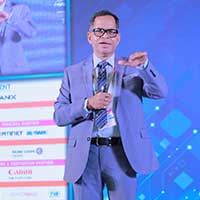 Mrutyunjay Mahapatra
Member Board Of Directors and Chairman Audit Committee , Reserve Bank Innovation Hub (RBIH)
"As you work, travel, engage, interact, strategize and position your organizations, things based on which you are doing these things are changing. When there are many moving parts, how do we deal with it? So, what we need to understand is that the world is changing.
Disruption is a disturbance or a problem which interrupts an event, activity or a process. It is not simply disturbing, but the action completely changes this traditional way that an industry or market operates by using new methods or technology.
We will not be looking at disruptions in a common-sense way. It is fashionable to use AI, disruption, and digital transformation, but we must understand what exactly it is. So, disruption are two things - one, it must do a disturbance, an interruption and the action has to change the traditional way completely.
Earlier, when you were driving a car, you were just driving a car. Today, your car has a multitude of computers. As you turn your steering wheel, a chip gives the indication based on the pressure on your steering wheel as to which direction you want to turn, it is the so-called power steering. In most modern cars today, you can start it using your mobile phone. What is the result? The result is that data is getting captured. Today you will see advertisements where daily insurance is available, based on the past 365 days rolling average of your driving habit - the amount you are driving, where are you driving, whether you are caught in the traffic, the insurance premiums could be fixed. These are disruptions. So, the first thing is that the explosion of data is enabling these things. Second, technology is there to harness this. Today, for example, every moment is shared in social media because suddenly the camera facility is available on your mobile phone. So, availability of technology, data, and the growing expectation of the consumer. Disruption is coming because all the moving parts are ready."
Cybersecurity is not just an IT issue; it has evolved into a complex, specialized field requiring dedicated professionals
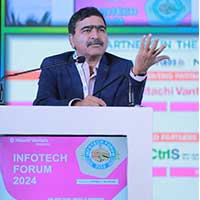 Prof. Triveni Singh, Ex-IPS
Chief Mentor- Future Crime Research Foundation
“Emerging technologies present both opportunities and threats. While businesses in the corporate sector leverage these technologies for growth and efficiency, criminals exploit them to commit crimes. For example, in the realm of AI, criminals were quick to adopt AI for nefarious purposes. They use AI to craft convincing emails and letters that are difficult to distinguish from genuine ones, unlike in the past when spelling errors and syntax mismatches were clear indicators of fake emails.
With 30 years in law enforcement, including 15 years investigating cybercrime, I’ve encountered numerous cases where emerging technologies were misused. One such technology is Voice over Internet Protocol (VoIP). Originally designed to enhance privacy and business communication, cybercriminals use VoIP to create virtual numbers, enabling them to impersonate others and commit crimes. This misuse extends to email, where criminals can send fake emails that appear genuine to the untrained eye.
AI also introduces the threat of voice cloning. Criminals use AI-based tools to clone voices, leading to thousands of fraud cases reported globally. This misuse highlights how quickly criminals adopt new technologies. For instance, when we introduced an online examination system in Uttar Pradesh, criminals immediately used remote access tools (RAT) to compromise the system. They installed RAT on computers, allowing solver gangs in Mumbai to access students’ terminals and solve exam questions remotely.
Security practices need to be strictly observed and implemented by the government and financial institutions. There is often a lack of awareness about information security practices, even among senior bank officers. Many are unaware of the directives issued by regulatory bodies like the RBI or IRDAI regarding cybersecurity. This gap in knowledge and practice makes systems vulnerable to attacks.
Temples using facial recognition technology can raise significant data privacy concerns
 Dr. Pavan Duggal
Chairman- International Commission On Cyber Security Law
“Recent reports indicate that temples are now using facial recognition technology to monitor all visitors. When you go to a temple to pray, cameras capture your face, raising significant data privacy concerns. From an Indian perspective, the transformation over the past 20 years has been remarkable. Since the commercial introduction of the internet on August 15, 1995, the landscape has changed dramatically, making data privacy a critical issue.
Cybersecurity attacks are increasingly frequent, targeting personal data. In the event of a data breach, the costs can be substantial. India has faced historical challenges due to the lack of a dedicated data protection law, relying instead on the Information Technology Act of 2000. This 24-year-old legislation has provided a foundation for the growth of electronic commerce and governance. However, there has been a growing demand for a dedicated data protection law, leading to various efforts.
The Digital Personal Data Protection (DPDP) Act, passed by the Parliament on August 11, marks a significant milestone. Although not yet implemented, the DPDP Act defines personal data as any information that can identify an individual. A breach of personal data is also a breach of data privacy, as individuals expect privacy regarding their generated data.
The DPDP Act introduces three key concepts that every Chief Information Security Officer (CISO) must understand: 1) Data Principal: Individuals whose data is being collected. 2) Data Fiduciary: Entities determining how data will be processed. 3)Data Processor: Entities processing data on behalf of the Data Fiduciary.
Technology strategy should fit into business strategy focusing on enhanced revenue while improving operational excellence
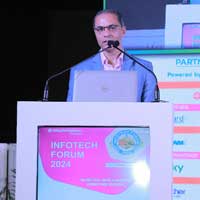 Rishi Mehta
President & CEO- Waisl
“As part of our expansion, we have been embracing many emerging technologies, both internally and for our customers. One technology that everyone is aware of today is Artificial Intelligence (AI). There's no need to explain what AI is, as we've all heard about it, including generative AI and large language models (LLMs). The jargon can be overwhelming, making it difficult to keep up. Looking ahead, you might hear terms like SLM (large object models) instead of language models. Regardless of your sector—whether it's healthcare, manufacturing, IT, pharmaceuticals, law enforcement, or hospitality—you are likely thinking about or using AI.
One challenge I see is that many companies are developing separate AI strategies. From my career experience, I have learned that technologies are enablers and should be integrated into your overall business strategy. Companies often rush to create an AI strategy without aligning it with their long-term business plans, which span one, three, or five years. Your technology strategy should fit into your business strategy, which focuses on enhancing revenue, improving operational excellence, reducing costs, and enabling customer return on experience (ROE), which ultimately leads to ROI.
When considering AI, generative AI, or LLMs, think about how they can enhance your business. This approach is what we found effective in our internal strategy exercises. However, AI and other emerging technologies come with ethical challenges, which can create more problems than they solve. I support AI but want us to be mindful of these challenges, focusing today on the ethical aspects.
Often, we are unaware of the ethical implications of AI. During the COVID-19 pandemic in 2020, I led the deployment of horizon technologies in the US, including a contract with the National Hockey League for stadium access control systems. These systems used computer vision cameras to maintain social distancing as people entered the stadium. The AI algorithms matched patterns from the video to verify identities, similar to systems used in Indian airports for Digi Yatra.”
POV can safeguard organizations from cyber crimes
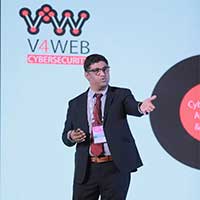 Ritesh Bhatia
Founder, V4web Cybersecurity
"We have been hearing a lot about AI but we are forgetting how the AI-based cyber crimes are going ahead. For example, DeepNude application, in only six seconds with one picture, the application will produce a complete nude picture of a particular person. Then we have been talking about voice cloning, recently the scams that are happening are related to voice cloning. For example, today I am in Delhi and Dr Deepak Sahu made my creative and we put it up on LinkedIn and other platforms. So, the cyber criminal knows that I am not in Bombay. Also, my wife is traveling and she has posted on LinkedIn. So, my father will now get a call from my son and he is asking for help as he met with an accident. It is my son's voice and video. Then my father will obviously transfer the money. More than 30-40 cases of this type have happened.
Also, we have heard about the Deepfakes happening about celebrities and politicians. We are also talking about the Airtel breach, though the company denied, where 37 crore of user data - our name, address, father's name, Aadhar number, photo ID and address proof is leaked. Tomorrow, what if Dr Deepak has to call up his colleague and ask for some data then is that really Mr Deepak in that case? Has this happened in enterprises - several times. The CEOs, the CISOs, the heads of infrastructures are now going to be targeted in this particular fashion.
The point is, when it comes to the cyberspace, please do not trust what you read, see and hear. We just need to follow three tools that can save us whether we are individuals or corporate, it is POV - P stands for pause, o, use it as zero trust. Do not trust what you see, read and hear. Once you do that you will automatically go to the third tool which is verify. Verify every information. So, if we just use these three tools then of course we are going to be safeguarding our organization."
India's global brand presence is growing steadily
 Dr. Deepak Kumar Sahu
Editor-in-chief, Varindia & Group Publications
“In the next three years, an estimated 5 billion people are expected to be impacted by data breaches. This alarming projection highlights the critical need for enhanced cybersecurity measures and greater awareness of data protection practices. The financial repercussions of data breaches are substantial, including the costs of remediation, legal penalties, and loss of business. The global cost of data breaches is projected to reach $10.5 trillion annually by 2025. This underscores the importance of prioritizing cybersecurity measures for businesses of all sizes. This presents an opportunity for everyone in this house and those watching the event online to plan their future business and professional roadmaps with a focus on robust cybersecurity measures. The projection that 5 billion people could be impacted by data breaches in the next three years underscores the urgent need for enhanced cybersecurity measures and greater vigilance.
India's global brand presence is steadily growing, showcasing the country's unique blend of innovation, cultural richness, economic potential, and strong, visionary leadership. Central to this transformation are India's tech companies, which play a pivotal role in driving the country's ascent on the global stage. The BRAND BOOK 2024 is a testament to the transformative power of digital technologies. It celebrates the achievements of CPSUs, enterprises, tech brands, and technology partners who are leading the charge in the digital revolution. Their stories of innovation, collaboration, and strategic foresight provide inspiration and guidance for all organizations aspiring to succeed in the digital age.”
CORPORATE PRESENTATIONS
Resilience becomes a top priority for cyber-practitioners today to combat threats
 Navin Mehra
Regional Leader- Cyber Security - Cisco India & SAARC
“We have been seeing a coordinated cyber-attack on our FSI segment and are observant of the fact of how the number of attacks in the last six months have grown exponentially. India becomes the number two target for our adversaries. So what we heard in Indonesia sometime back is also a resonance of what's happening from an Indian economic perspective; a rising economy with rising GDP could result in these types of attacks in general from the infrastructure perspective. Again, we recently saw what happened in terms of the BSNL data breach and this can result in a lot of this data getting exploited. These are some very recent threats on our infrastructure and under such circumstances, resilience becomes a top priority for most of the cyber practitioners to achieve. There has been a survey from Cisco in 2023-24, which talks about what's the state or the mindset of organizations when it comes to adopting cybersecurity solutions in general. Today we live in a connected, complex and complicated world. When we say connected, we have users and we have got them connected from various modes and methods through various devices in general. A hybrid workforce is definitely an important part of a business today. Today the Network is borderless, and as we call it the network starts from where the user is.
Our applications are no longer in a private data center but they are sitting on a hybrid or a public platform, which was probably not the thought maybe five or six years back. The users and devices in a hybrid world are increasing exponentially. So this is a very complex scenario where a user is connected to an application which can be anywhere on the cloud, in any type of platform or data center across. But the access or connectivity persist through various untrusted, trusted networks across. Some of them are encrypted in nature, while some of them are unencrypted. So the complexity around this axis is very high and it is on the rise. When you want to protect everything, everywhere, every time you prospectively do not know who you are protecting or from whom you are protecting. We already know the users today are accessing their private devices from any network, but are we really looking at contextual access to their data. If a user changes his access from a trusted WiFi network into an office while on the fly into an untrusted network or a Wi Fi, are we putting the right guardrails in terms of giving an access to the application?
The role of the CIO in the emerging technology landscape is to focus on the core
 Anil Nama
CIO- Cloud 4C & CtrlS Datacenters
“CtrlS, as a data center provider serves one of the key components, which is powering the hyperscale phenomenon in India. Cloud 4C, on the other hand, is a cloud service provider and an MSP. The world is producing 272 zettabytes of data. The Gen AI market is exploding, the ChatGPT that we use are in our professional capacity. I still can vouch that there are very few professional ChatGPT users who use it for their personal capacity. Now where would it make an impact? It is talking about a potential market worth of $15.7 trillion, and India's dream is five to six trillion dollars. We are talking about an impact of $15.7 trillion out of which, $3.8 trillion can be accrued to manufacturing sectors. This means that this interpretation or engagement of human and machine collaboration, which is to better our manufacturing processes, creating goods that are consumed by the end user and are manufactured in the right way, is one of the major focuses of AI.
The second segment is drugs; we saw during Covid how scientists worldwide tested, developed and got the vaccines out successfully within such a short span of time. Therefore, I believe the future of molecular research, around drug discovery, simulations, around using digital twins for testing, is where AI is going to make a big impact. And the third impact will be on the convenience of the end user to use consumer goods. For instance, the simple mobile phone is an example to you today. Today a mobile phone works wonders as you can operate your email application, a banking application in it; it also works as a camera and it is also a multimedia device to communicate with the rest of the world. This ease of use is being benefited by enhancing the intelligence of a device which at one point was only for voice communication. As the CIO, our role in this emerging tech landscape is to focus on the core, and drive the maximum for our businesses. If you just take a keyword analysis, the topmost keyword coming out is generative AI. There are several priorities of the CIOs that have to go in to adopt this AI.
Firstly, a CIO has to understand where it makes an impact. Second, he/she has to create a business case to explain it to other people how it impacts their business processes. Finally, a CIO has to have a learning environment in which he has the requisite skill sets to manage those systems and then deliver the results.
Talking about Agile AI, it could be the implementation of chatbots. Today, whether it is the Indian Railways or a private company, or whether it's a bank, everybody uses a chatbot. There is no longer the practice of calling a call center and holding on to the phone to get your queries answered.”
Data storage is the foundation on which Hitachi Vantara is built
 Yati Mago
Sr. Solution Consultant- Hitachi Vantara
“Data storage is the foundation of Hitachi Vantara. Our DNA talks about data storage. We have over 35 years of experience into the various aspects of the business from a data perspective. Our customers who have been there with us throughout rely on us, and trust us to be their trusted partner for their critical business workload. This trust is so eminent that they have taken us to be a part of their journey on their most important critical workload. These customers are across verticals like banking, finance, telco, manufacturing and so on. With the trust of the customers and the partners and together with our vision, we actually have transformed our strategy of what we as a brand stand for. Our strategy is actually based on four key pillars - trusted data infrastructure, intelligent simplicity, hybrid cloud agility, and data integrity.
The trusted data infrastructure is based on our enterprise based functionality, which gives the end customer the freedom and the flexibility to use the storage with no worry of any loss of data. Intelligent simplicity is based on our AI engine, which has been built into the family, and that we have to make it simpler and more intelligent in terms of operations and management aspects. From the hybrid cloud agility, what value Hitachi Vantara brings on the platter is that whether you are on the cloud, or on an SDS or an appliance, we will give you the same experience to the application to the end customer to work on so that the management and the interface issued for admins would be removed. So we all have seen how the data has grown tremendously from the past few years. In the next three years, the data that we are going to generate will be equal to the data that we would have generated in the last 30 years in one go. 79 zettabytes of data have been generated in the last one year. And it is not just the data but the intelligence that we have generated from these data has also grown up. The security of the data, the compliance, and the regulation are also playing a key role along with the data. Aspects like where to store the data, how to store the data, how to ensure the data availability, how to ensure the backups, are some of the things that we need to look into. If you add to the story of edge and the cloud today, the integrity of the data has been blown up. In order to make data more valuable for the end customer, we should ensure the integrity of the data and guarantee the accurate and correct data to them. Our strength is such that 90% of the banks globally, 80% of the health providers, 10 out of the 10 top insurers, manufacturers and the telcos trust Hitachi Vantara for their production and data workflows. Even in India, 90% of the banks are with Hitachi Vantara for their most difficult workloads.”
Technology is so dynamic and diversified that it becomes difficult to keep pace with
 Amit Jain
MD & CEO- Integrated Tech 9 Labs
“Before we get to India's tech future and the emerging technologies, it is important to understand how our decision making happens in India. India is a distinct country, with very distinct people, and with a much diversified culture. We have a very different mechanism of decision making. South India has a very different decision making process compared to North India and we all have very different mindset. But one thing which stands common is India’s deep rooted value system that drive the decision making process. Since our childhood we have been told how to derive the maximum out of anything at the lowest possible cost, whether that be while buying a house, or getting admission in school or even buying a Rs 5 worth thing. But we know technology is so dynamic, diversified and because it keeps changing, it becomes so difficult to keep pace with. It is equally difficult to keep adapting to different technologies over a course of time. But there are some technologies that really make a great impact at times. Since 2010- 11, especially after the recession, one technology has really geared up fast, and that is the Cloud. Everybody started talking about the cloud. Especially during the pandemic, everybody started thinking of doing away with infrastructure and investing on the cloud rather. And that is where the entire technology, the landscape or the application resides, and that is how we are going to work. In cloud, we are not just talking about the public and private cloud but the hybrid cloud infrastructure. It is embedded in our culture and we know how to extract the best out of the two best worlds. That is where our intelligence lies. And that is how we want a technology to actually get into a hybrid multi cloud setting; you should be able to run your application from anywhere, wherever you want. And you should be able to transition from cloud to on prem and from on prem to cloud at any stage, without any disruption. And you should be able to transition, not only from cloud to on prem, but also between multi cloud perspectives.
Generally Indian businesses have more constraints or challenges when compared to their global contemporaries. Budget, staffing and time are some of the key challenges that they face. So you need a technology that will help you to carry on your business despite the constraints. Additionally, the kind of data that businesses have is spread across; especially the unstructured data and it is growing like crazy. With edge computing, explosion and proliferation are happening at all the levels. This is another constraint which is actually leading to some level of thought process which you have to look at.”
Cybersecurity has emerged as one of the top five highlighted areas of WEF
 Rohit Sobti
Head Emerging & White Space Business-North & East India, Nepal & Bhutan- Fortinet
“Cybersecurity companies and organizations continue to talk about cybersecurity frameworks and its importance. Cybersecurity as a concept has always stayed and improvised over a period of time. But there are a lot of mature and respectable brands that do exist in the industry. A significant amount of investments are happening on cybersecurity platforms. As of now, India, of course, is the fifth largest economy and with possible architecture towards that, the GDP of the country is continuously growing. By that logic, cybersecurity is one framework that becomes of prime importance to our country or any organization, because, needless to say, financial transactions, corporate transactions, manufacturing setups, multiple denominations, are going crazily up day by day. There is a $2.5 billion worth of cyber security market that does exist in the cyber security framework within the country. Close to $84 billion new transactions happen every day, every year. This is the size of the cyber security space which is available to address. Approximately $10.5 trillion worth of market is going to go up from the past number of trillion in the cybersecurity space. The economic, social and the cultural conflict that will come into existence is going to be impacting this area of business. The cybersecurity space is eventually going to rise upwards. And by virtue of that, the need for making a smart network, smart ideologies and smart identification of the cyber security framework will be of prime importance.
The World Economic Forum has highlighted five very important areas that require immediate attention. Of course, there are transformational areas where weather conditions are deteriorating day by day. Interestingly, two of these five very important aspects are cybersecurity related. They were never there earlier, but in the last couple of years, cybersecurity has actually erupted in the top five world economic forum areas. This is really alarming. As a matter of fact, there are a total of 1008 unique cybersecurity brands that exist as of today, and because of that, people still do not know what to invest, where to invest and where not to invest. Priorities of an organization is something that an organization’s CTO or a CIO or CISO has to basically maintain and understand in the interest of the business. In the country as of today, per 1000 rupees spent on revenue in an organization, 1.6 rupees is spent per employee on cybersecurity. This is the cyber security spend ratio as of today. This might need some bit of attention, because going forward this is going to be changed.”
Kaspersky has evolved as a complete cyber-forensics and investigation company
 Gaurav Bhatnagar
Head Enterprise Business – Kaspersky
“Kaspersky has been predominantly known for offering endpoint securities and EDR (Endpoint Detection & Response) securities, but it is much more than that now. Eugene Kaspersky, who is the brain behind the company, decided to transform the brand into a complete cyber-forensics and investigation company, besides being an endpoint company. Kaspersky spends more than 70% of its resources globally in R&D. We still believe in selling and marketing our home grown products and don't have the intent to buy or to take over companies across the globe to build our capabilities.
Gone are those days when we saw organizations had random ransomware attacks, where threat actors used to send phishing mails and when clicked on any of the links by any user they would be breached. If you see five years down the line, the trend that we see are attacks becoming much more sophisticated, and specific. Hackers are seen attacking those companies that they target to attack and they have their own objective of attacking it. The intent is very clear as to why they are targeting that particular company. Ransomware attackers are working like an organization nowadays and it is no longer a one man show or a two people company. So they have their own organizations. We have found out in a couple of compromise assessment datasheets that there are so many organized ransomware attackers who have their own entities with a manpower of more than 100. Interestingly, when they attack any company, it doesn't mean that they have started their attack strategy one or two week or one month back. These companies have their own PTPs, as in why they are targeting you and what the motive is behind. So they have a complete developer team, a web team and our job starts here, when as a cyber-forensic company we analyze in detail the type of attack and the response to those attacks.
There are some common challenges that CIOs face nowadays. Firstly, there is no visibility. When I say visibility, it means the visibility from the dark web surface. In spite of there being so many search engines, which are smart and AI enabled, and we can search so many things on the surface web, there is a lack of visibility on the dark web. Tools to search on the dark web are very rare and the couple of tools which are available, do not give you the granular information you need to keep track of attackers. The second challenge is mitigating these kinds of attacks is too complicated, because everything happens behind closed doors. And plus, attacks have become so sophisticated.”
Fireside Chat:
TOPIC: Hyperscaler Fatigue prompting a shift back to On-premise Data Centers
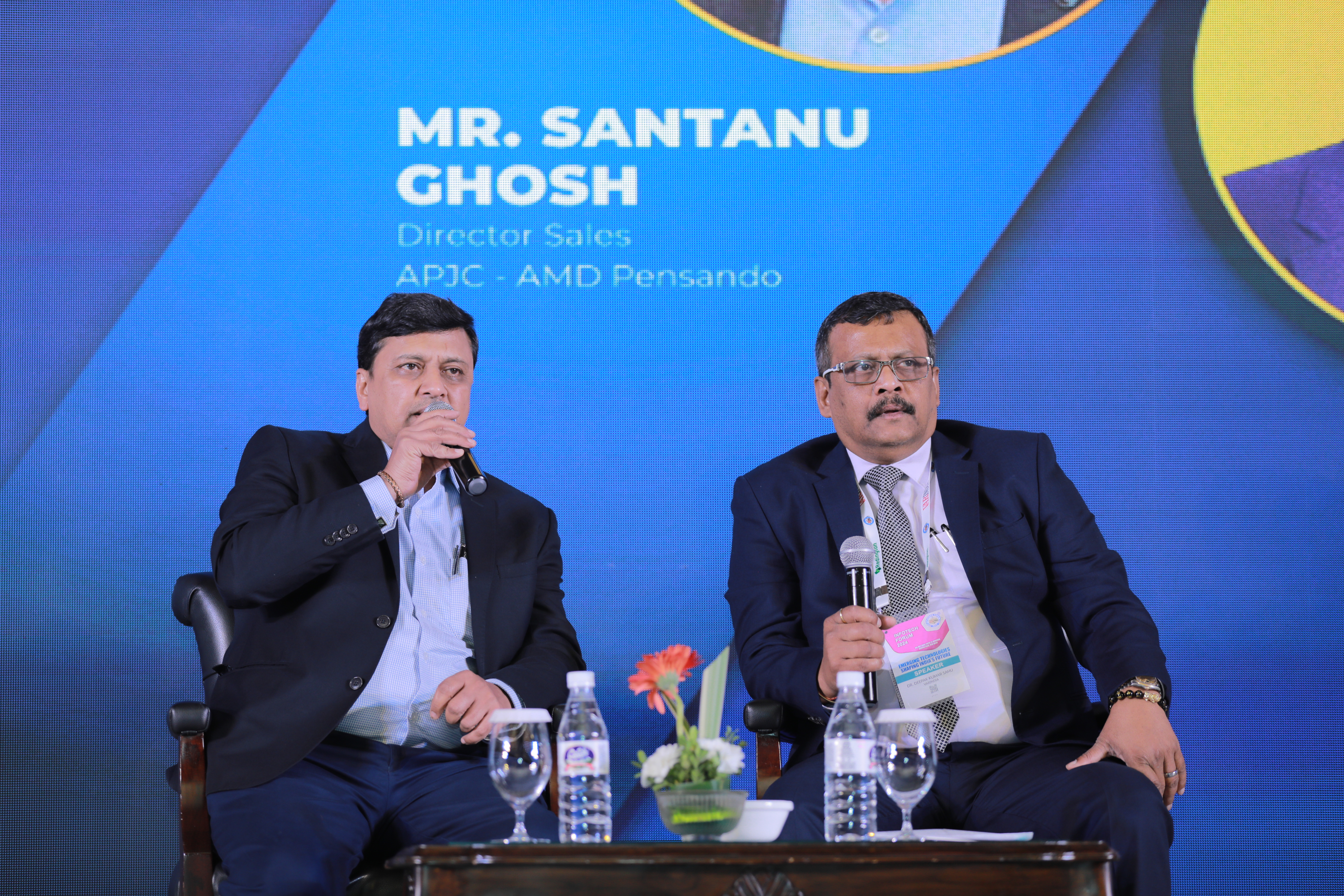
In the Fireseide chat session, Santanu Ghosh, Director Sales, APJC - AMD Pensando joined Dr. Deepak Kumar Sahu, Editor-in-chief-VARINDIA on the dais to discuss on how hyperscale fatigue is prompting a shift to on-premise data centers. The topic threw light on how hyperscaler fatigue is prompting a shift to on prem data centers. The growing hyperscaler fatigue driven by over cost control, security and performance is prompting many organizations to reconsider and take advantage of on-prem data centers. While hyperscalers offer undeniable advantages like scalability and agility, these concerns are prompting a shift towards a hybrid approach. Organizations are strategically utilizing both cloud and on prem solutions based on their specific needs. There are growing trends of organizations re-evaluating on prem data centers due to hyperscaler fatigue. Data security and compliance are paramount for some industries. On prem gives organizations control over physical security, data access and regulations.
According to Santanu, there are two things that are emerging very strongly. As large businesses are moving to cloud, they are realizing that there is a cost impact and it is no more a cost arbitrage. When the initial journey to the cloud happened, a lot of it was prompted by the capex coming down. But going forward, the Opex is really going fast as the scale of cloud operations is increasing. So that is a fact which many large organizations are realizing. After doing a cost benefit analysis, they see that by having their workload on prem, or by distributing it between the cloud will be much more cost effective for them. But the major issue where the cloud still continues to be a very compelling solution is their ability to be agile, and scalable (you can offload and launch your services very fast). So scalability and agility are something which the cloud is offering.
If any business has to move to hybrid, then they have to look at alternative technologies. In the last couple of years, a lot of alternative technologies have arrived which are truly making the enterprise cloud class. So Santanu believes that while the fatigue is coming in, there are now options for the enterprise to look at by moving some of the cloud loads back to the data center, and dividing the workloads between the two and at the same time making the data center as agile and scalable as the cloud.
So what is really driving the fatigue with hyperscaler cloud providers? It was surely more of the cost, but more than the cost, it is the flexibility in terms of wanting to do many things on your own. Businesses have to look at change management (a lot of enterprises managing large IT operations do not like it) and going through approval processes with their service provider.
It was around 2015 when the cloud really became very effective and enterprises seriously started moving towards cloud? Santanu provided the example of Amazon which started giving customers a kind of service which was very agile, and where security, storage and the compute part of it were integrated in one stack. This ensured that Amazon could give a much faster service.
Unveiling of the 13th edition of VARINDIA Brand Book

The evening session commenced with the grand unveiling of the 13th edition of the Brand Book in the presence of the esteemed guests. Standing true to its principle of empowering technology through OEMs, IT corporates, technology evangelists, solution partners & VARs, the coffee table book provided a platform for these industry folks to share their knowledge and expertise with the wider IT community. The Brand Book is today positioned as a trusted resource for end customers, and serves as the definitive guide for making informed decisions amidst a sea of choices. It is regarded as the ultimate vehicle for the corporates/Digital PSUs/ Start-ups to position their products and service offerings to the desired end customers.
Respected dignitaries and luminaries from the industry took to the stage to grace the unveiling of the book.
Panel Discussion Session – I : Topic – The evolving role of CIO
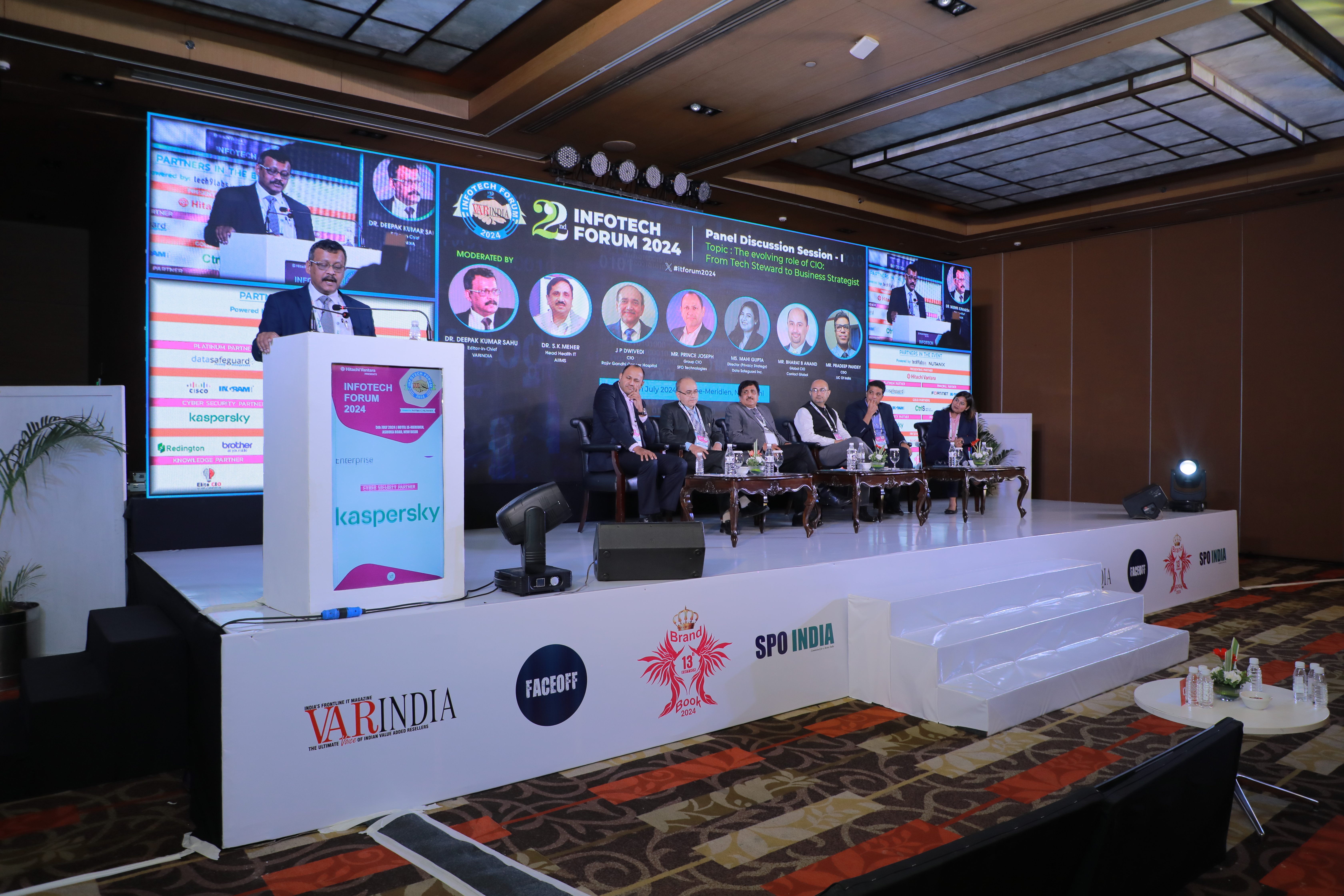
The first panel discussion was on the topic - The evolving role of CIO: From Tech Steward to Business Strategist and it was moderated by Dr. Deepak Kumar Sahu, Editor-in-Chief, VARINDIA. The panellists who joined the discussion were Prince Joseph, Group CIO-SFO Technologies; Dr J P Dwivedi, CIO-Rajiv Gandhi Cancer Hospital; Dr S.K. Meher, Head Health IT- AIIMS; Bharat B Anand, Global CIO- Contact Global; Mahi Gupta, Director (Privacy Strategy) - Data Safeguard Inc. and Pradeep Pandey, CDO- LIC of India.
Dr J P Dwivedi
CIO, Rajiv Gandhi Cancer Hospital
Now, the role of CIOs is shifting from the supply side to the demand side. This happens in three phases – one, business envisions the strategy. It runs the operations and it asks the CIO and his team to comply with the demands. In stage two there is more awareness about what technology can do in enabling so many new business horizons working on new different segments, CIO becomes part of the strategy and decision making. His team is also very much involved. In stage three CIO drives innovation, business and strategy.
Prince Joseph
Group CIO, SFO Technologies
There are two ladders, one is on the business side, how their mindset is changing and one is on the technology side, how the CIO needs to evolve and reach the top of the ladder themselves. Sometimes a CIO exits and a new CIO comes in, then the expectation is different. But the business does not stop. So, the expectation is that the new CIO is able to speak to the business in business terms, know the business and the functions, and are able to influence and drive strategies. This is a great opportunity - as how the CIO is going to deal with the scenario and expectation. So, the competency, skillsets and leadership are at the forefront and it is as important as technical competence.
Bharat B Anand
Global CIO, Contact Global
The role of Chief Information officer has become Chief Involvement Officer, Chief Influencing Officer, maybe Chief Invoicing Officer at times and Chief Integration Officer because these days everything is connected. We are going to have almost 30 billion devices connected by 2029. The bottom line is the convergence happens at CIO’s desk.
Pradeep Pandey
CDO, LIC of India
The CIO role is very intertwined, now they are as good as a business owner. Traditionally CIOs were seen as a support department. I think there is a mind shift where only from providing the user requirements they now look at the problem statement and work on those requirements proactively. Today we are saying everything is digital and if you move from paper to digital then of course CIO’s role becomes very instrumental. But they are as much a decision maker as just an implementer.
Dr. S.K. Meher
Head Health IT, AIIMS (All India Institute of Medical Sciences, New Delhi)
As I am into a healthcare organization, the major objective of this digital transformation means how accurate and quality of services we will provide to the patients and as well as the researchers. In these cases, we need a lot of quality data and all the data is supposed to be properly standardized. The factor is that how to save the doctor's time when implementing the technology? That is where AI plays a major role. For example, our entire lab is automated. The pre-analytic, analytic and post analytic are totally automated and manual intervention is very negligible. The reporting time has been reduced to nine hours. We have implemented technology to use the resources more efficiently, provide quality of care and increase the services.
Mahi Gupta
Director (Privacy Strategy), Data Safeguard Inc.
Since we are moving into a digital world, data and information are the most important assets and today the capability of AI and ML give predictive market analysis and every sort of consumer behavior analytics. But this also means that there is strategic planning involved. You need to start putting data governance and data strategy at the head of the pin of everything. The most important thing is the resource allocation, sustainability and scalability also has to be looked at from a perspective that solutions should not be a quick fix and should offer a long-term solution.
Panel Discussion Session – II : Topic – Role of CTO on Growing Hyperscaler Fatigue
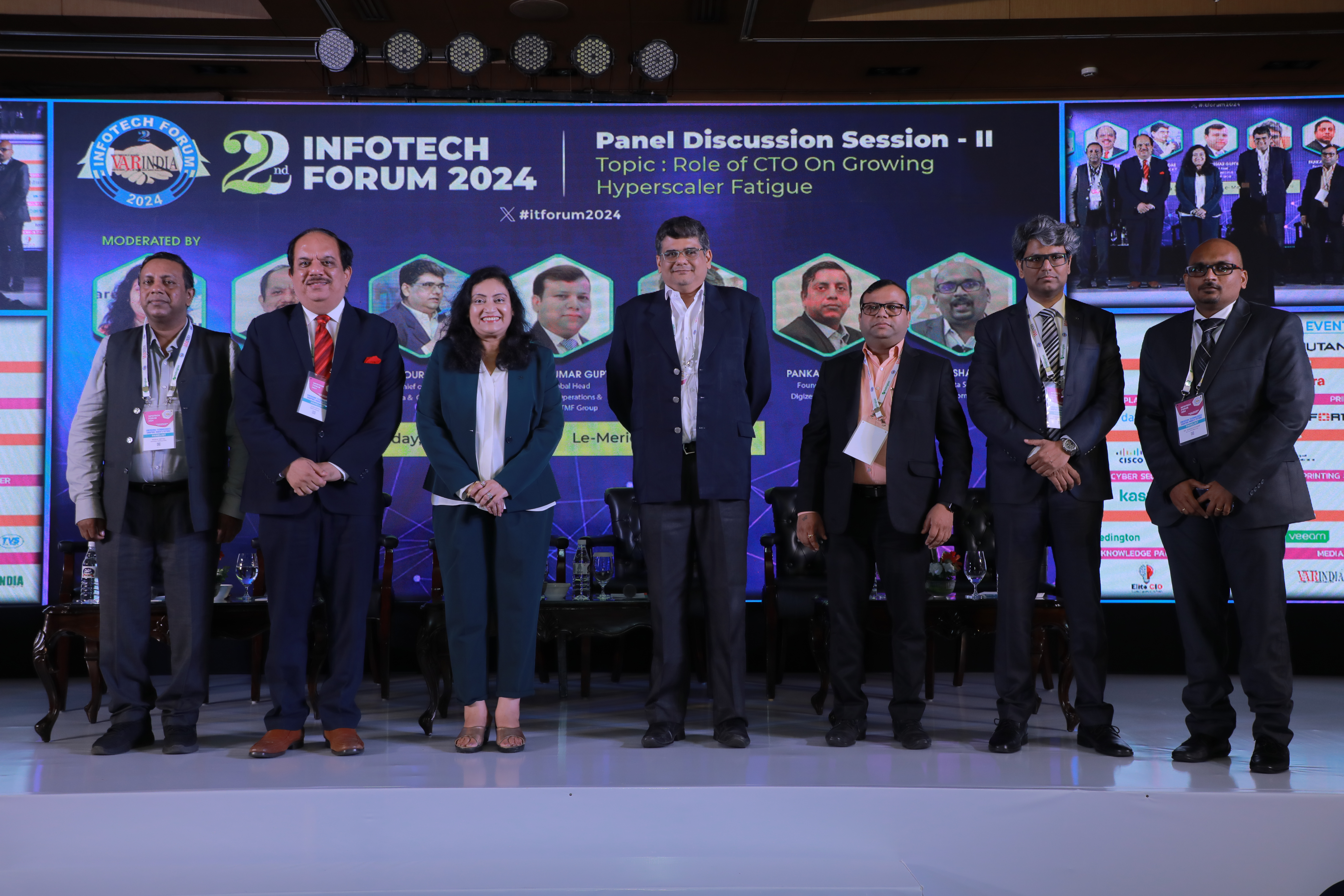
The second panel discussion on the topic – Role of CTO on Growing Hyperscaler Fatigue was moderated by S Mohini Ratna, Editor – VARINDIA. The panelists joining the discussion were Vijay Sethi, Chairman, Mentorkart; Sourav Das, Group Chief of Digital & IT, Rupa & Company; Vinod Kumar Gupta, Director, Global Head - Cyber Security Operations & GRC Practices, TMF Group; Dr. Akansha Kumar, Chief Data Scientist, Jio Platforms Ltd; Sandeep Sengupta, Director, Indian School of Anti Hacking and Pankaj Mittal, Founder & CEO , Digizen Consulting.
While moderating the panel discussion S Mohini Ratna, Editor, VARINDIA said, “In the face of growing hyperscaler fatigue, a CTO (Chief Technology Officer) plays a critical role in navigating the complex decision between on-premises data centers and cloud solutions. This shift back to on-premise data centers is driven by a combination of financial, operational, and strategic factors. By re-evaluating their infrastructure needs and leveraging on-premise solutions, organizations aim to achieve greater control, security, and efficiency in their IT operations.”
Dr. Akansha Kumar, Chief Data Scientist, Jio Platforms Ltd
“There are multiple dimensions to consider. You need to evaluate expenses, including capex, and the level of scalability required for the organization's applications. Additionally, consider redundancy and disaster recovery factors from a long-term perspective. It is challenging to choose between options because each has its advantages. While on-premises solutions may be more expensive, they offer tighter control and, if hardware requirements are well understood, can be preferable for the long term. However, if rapid business scaling is anticipated, then cloud solutions with hyper scalability become essential. Furthermore, consider other costs related to security and disaster recovery. Ultimately, if the timeframe and long-term application requirements are known, an informed decision can be made.”
Sourav Das, Group Chief of Digital & IT, Rupa & Company
“First of all, when setting up something on-premise, we need to consider costs such as real estate, administrative expenses, and electricity. Additionally, there are costs for maintenance, which must be managed internally. This requires suitable manpower to handle the scalability costs. We don't know how many people or users there will be, nor do we fully understand the technological complexity and evolving applications the organization will use. The infrastructure must match these evolving needs. Building on-premise can be difficult due to budget constraints. If we plan for five years, we tend to take a conservative approach. When it is time to scale up, it becomes challenging because on-premise scalability is harder to achieve compared to cloud solutions.”
Vinod Kumar Gupta, Director, Global Head, Cyber Security Operations & GRC Practices, TMF Group
“There are often hidden costs charged by cloud providers that organizations must be aware of. One such cost is the egress data charge. Cloud providers often design their rate cards with minimal ingress charges but high egress charges, which can catch organizations off guard. It's important for organizations to be vigilant and plan their budgets accordingly. Another significant cost to consider is API and service integration, which is often overlooked in budget planning. Organizations need to be aware of these costs and prepare for them accordingly. Additionally, there are network transfer costs within the same cloud provider. Transferring data from one availability zone to another can incur substantial charges, which organizations must consider.”
Pankaj Mittal, Founder & CEO, Digizen Consulting
“It all depends on the complexity of your business. Whether you are on cloud or on-premise, security is of paramount importance. There are numerous examples where organizations have moved from the cloud back to on-premise for various reasons, such as regulatory requirements, legal mandates, or business complexities. Security at each stack—whether it's the cloud, app, database, or privacy—presents its own challenges in terms of complexity, licensing, tools, skilled manpower, and processes. Managing security on the cloud versus on-premise each has its own pros and cons. The ease or complexity of managing security depends on the type of trained manpower available to handle incident management and compliance with regulatory requirements.”
Sandeep Sengupta, Director, Indian School of Anti Hacking
“From my 26 years of experience in cybersecurity and information security audits, I have observed that the further you go from on-premises solutions, the more challenges companies in India tend to face. Security here is often driven by two factors: compliance or incidents. Most of the time, security becomes a priority only when one of these factors is critical. When moving to a hyperscaler, both compliance and incident response present significant challenges. While technical security aspects are usually well-covered, there is an often-overlooked area that can cause major issues: the SLA and contract details."
Vijay Sethi, Chairman, Mentorkart
“The debate on on-premise versus cloud solutions has been ongoing for the last 10-20 years, with various parameters influencing the decision. The best option depends on the type of application and data you need to access. For instance, if you have research-driven data with many 3D files, you will need significant bandwidth, and latency can be an issue. As your data and software versions grow, the need for bandwidth increases, leading to hidden costs in constantly upgrading your network infrastructure. On-premise solutions can mitigate the issue of faster response time, assuming you have a decent local network (LAN) setup, reducing latency concerns for data-heavy applications.”
Panel Discussion Session – III : Topic – India's Digital Landscape: A deep dive into Data Protection Act
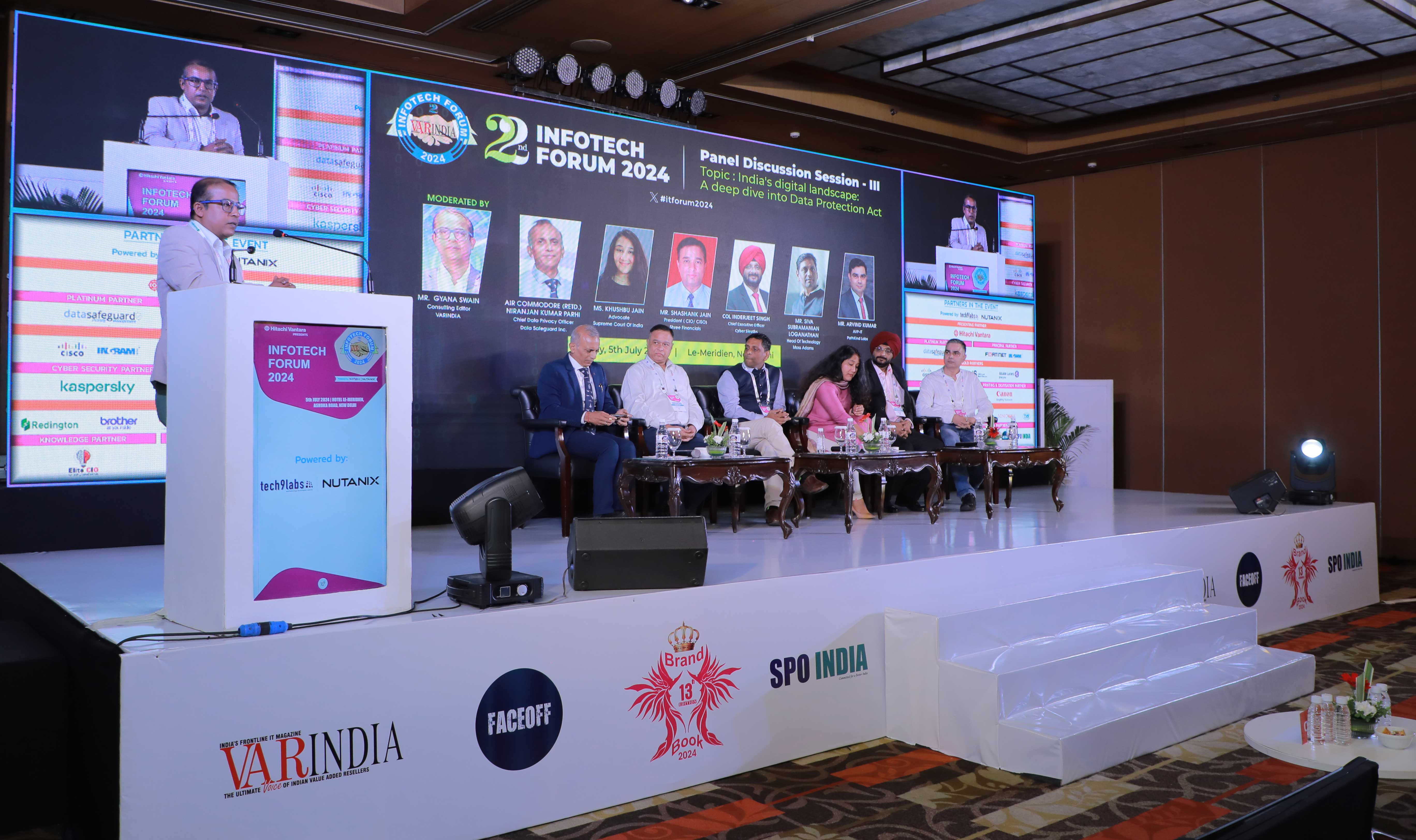
The third panel discussion session was on the topic - India's Digital Landscape: A deep dive into Data Protection Act and it was moderated by Gyana Swain, Consulting Editor-VARINDIA. The panellists were, Air Commodore (Retd.) Niranjan Kumar Parhi, Chief Data Privacy Officer- Data Safeguard Inc.; Khushbu Jain, Advocate – Supreme Court of India; Shashank Jain, President (CIO/ CISO) - Shree Financials; Siva Subramanian Loganathan, Head Of Technology- Moss Adams; Arvind Kumar, AVP-IT- PathKind Labs and Col. Inderjeet Singh, CEO – Cyber Sleuths.
Gyana Swain opened the discussion by introducing how crucial is the topic of the Digital Personal Data Protection Act (DPDP) Act, 2023. “Ever since it came into effect, we have been discussing this act. But there are a lot of jargons that are attached to it. While organizations may have got a hang of it or understood in clear terms about how to protect themselves or their data within the purview of this Act, not all individuals are aware about what this law is all about.
Khushbu Jain, Advocate – Supreme Court of India
Khushbu Jain explained the Act in layman terms. “In a nutshell DPDP is nothing but ideally what companies should have done long back. It is all about the ethical norms like if I take somebody's stuff all I have to do is make them aware about it, and let them know for what I am taking it and if there is a misuse of that thing I make them aware about it. These were the basic ethical things which have to be kept in mind. But this was not the case ideally, looking at how data infiltrated the entire ecosystem as we went on to embrace Digital India and countries across the globe realized the same. So the government, having realized that data plays a very important role for a lot of things like safeguarding the country’s security or even personal security, they created a law which talks about the DPDP Act. This Act is nothing but the basic rights which an individual has over its data and which is an extension of the right to privacy.”
Air Commodore (Retd.) Niranjan Kumar Parhi, Chief Data Privacy Officer- Data Safeguard Inc.
Air Commodore (Retd.) Niranjan Kumar Parhi commented, “GDPR actually is considered the gold standard of data privacy. A group of 27 nations decided enough is enough, the Googles of the world cannot take my data and walk away and subsequently allow others to exploit this data for whatever reason or gains. The GDPR which came into effect in May 2018 was made applicable in the 27 nations of the European Union. India therefore having learned from the world, decided to take its own course of action and has come out with a document which is almost similar to GDPR but is an Indianized version.”
Shashank Jain, President (CIO/ CISO) - Shree Financials
Shashank Jain of Shree Financials talked about the challenges that his organization is facing post the implementation of the DPDP Act. “We are a financial company and are holding a large amount of customer data which is more than a petabyte. So understanding the DPDP Act in simple layman terms becomes very difficult. The in-house manpower is not adequate to translate the Act into simple terms. Also since we have an international clientele, we have to deal with the GDPR too. So both GDPR and DPDP become a double edged sword for us. Lack of budget and time also becomes a constraint to implement these kinds of things.”
Arvind Kumar, AVP-IT- PathKind Labs
Arvind Kumar of PathKind Labs said, “The main challenge for any organization is to identify the touch points where we are having the PII data, finding out where exactly it is lying, and how it is being handled. So things like where the data is lying, for how long it is lying, is it in use or not in use, do we still need that data or do we discard – are some of the areas which companies need to identify first.”
Siva Subramanian Loganathan, Head Of Technology- Moss Adams
Emphasizing on the challenges part, Siva Subramanian Loganathan of Moss Adams remarked, “I work with a lot of global capability centers and it is a common challenge for us to understand what kind of data we want to collect. It is still not very clear. Secondly, when it comes to data collection and processing, today everybody knows AI is using almost every data that is run today. So going forward it will be very difficult to differentiate between real data and AI data because so much synthetic data is going to be generated. So are we going to protect the personal data or the synthetic data is something which will be difficult to decide.”
Col. Inderjeet Singh, CEO – Cyber Sleuths
According to Col. Inderjeet Singh of Cyber Sleuths, going forward with the DPDP Act, the organizations need to really think about privacy by Design as a whole architecture. “We always happen to miss it out; we always talk of Security by Design, operations by Design but privacy by Design as to what data is to be collected, what is the life cycle of the data, if the data is there what is the minimal data which requires to be there – these are things which need to be considered. When the DPDP Act comes out as the law and given the increasing threat landscape, we will be able to catch the people or those entities who are holding our data back.”
Most Promising VARs In India 2024-25
In the face of fierce competition, brands that prioritize building and maintaining trust through delivering on promises, creating exceptional consumer experiences, and consistently providing value can significantly differentiate themselves.
Brands consistently meet or exceed customer expectations build a reputation for reliability. Consistency in product quality, customer service, and overall experience reinforces trust.
The Most Promising VARs/Partners in India 2024 initiative aims to recognize and celebrate technology brands that have excelled in winning the hearts and minds of consumers. These brands have not only delivered exceptional services but have also embodied a strong commitment to contributing significantly to India's IT success story selected by VARINDIA and the editorial team of Brand Book, acknowledging the remarkable achievements and contributions of these leading technology brands.
ACCERON INFOSOL PVT. LTD.
BM INFOTRADE PVT. LTD.
ARROW PC NETWORK PVT. LTD.
BLOOM ELECTRONICS PVT. LTD.
BLUECOM INFOTECH PVT. LTD.
CORPORATE INFOTECH PVT. LTD. (CIPL)
D M SYSTEMS PVT. LTD.
FUTURENET TECHNOLOGIES (INDIA) PVT. LTD.
INGRAM MICRO INDIA PVT. LTD.
HITACHI SYSTEMS INDIA PVT. LTD.
INFLOW TECHNOLOGIES PVT. LTD.
INTENSITY GLOBAL TECHNOLOGIES PVT. LTD.
IRIS GLOBAL SERVICES PVT. LTD.
IVALUE GROUP
NETPOLEON INDIA:
TECHKNOWLOGIC CONSULTANTS INDIA PVT. LTD.
NIVESHAN TECHNOLOGIES INDIA PVT. LTD.
PENTAGON SYSTEM AND SERVICES PVT. LTD.
RAH INFOTECH PVT. LTD.
RASHI PERIPHERALS LTD.
REDINGTON LTD.
RX INFOTECH P LTD.
SATCOM INFOTECH PVT. LTD.
SECURENET CABLES AND CONNECTORS PVT. LTD.
SHIVAAMI CLOUD SERVICES PVT. LTD.
SIGNTEL COMMUNICATIONS PVT. LTD.
SOUND SOLUTIONS (I) PVT. LTD.
SUPERTRON ELECTRONICS (P) LTD (VAD VENTURE)
SYROTECH NETWORKS PVT. LTD.
TD MEDIA NETWORKS PVT. LTD.
TECH DATA ADVANCED SOLUTIONS (INDIA) PVT. LTD.
Most Trusted Company - 2024 -25
In an increasingly crowded marketplace, where competition is fierce, brands have come to realize that trust is a critical differentiator that can make or break their success. Marketers and brand custodians understand that a brand’s ability to deliver on promises, create exceptional consumer experiences, and consistently provide value to customers through its products and services is what makes it stand out.
The Most Trusted Companies award aims to celebrate and appreciate technology brands that have successfully reigned supreme in the hearts and minds of consumers. These brands have not only delivered exceptional products and services but have also embodied a strong brand purpose, significantly contributing to India's Information Technology (IT) success story.
The award criteria is based on reliability, innovation, and customer satisfaction, these brands have set themselves apart and established a lasting trust with their customers.
APPLE INDIA PVT.LTD.
NVIDIA GRAPHICS PVT. LTD.
TATA CONSULTANCY SERVICES LIMITED
INFOSYS LIMITED
HCL TECHNOLOGIES LIMITED
WIPRO LIMITED
AMAZON INDIA
MICROSOFT CORPORATION (I) PVT.LTD
GOOGLE INDIA PVT. LTD.
RELIANCE JIO INFOCOMM LIMITED
BHARATI AIRTEL LIMITED
DELL TECHNOLOGIES INDIA PVT. LTD.
IBM INDIA PVT. LTD.
HEWLETT PACKARD ENTERPRISE INDIA PVT. LTD.
ACCENTURE
TECH MAHINDRA LIMITED
INTEL TECHNOLOGY INDIA PVT. LTD.
SAMSUNG ELECTRONICS INDIA PVT. LTD.
CISCO SYSTEMS INDIA PVT. LTD.
SALES FORCE
ADOBE
AMD INDIA PVT. LTD.
INGRAM MICRO INDIA PVT. LTD.
REDINGTON INDIA LTD.
ORACLE INDIA PVT. LTD.
Eminent CIOs of India (ECIO) 2024-25
Digital transformation is a transformative journey and not just a tech upgrade. It's about leveraging technology to completely reshape how a business functions at its core. It is a complex and challenging process, but it can be incredibly rewarding for businesses that are willing to embrace it. The criteria behind choosing the Eminent CIOs of India are multifaceted, focusing on recognizing individuals who have demonstrated exceptional leadership and innovation in the field of Information Technology
These CIOs have exhibited strong leadership qualities and a clear vision for the future of technology within their organizations. They have done significant IT initiatives that align with the strategic goals of their organizations. Recognition is given to CIOs who have introduced innovative solutions and technologies that drive business growth, improve efficiencies, and enhance customer experiences. Their ability to think creatively and implement cutting-edge technologies is crucial.
These are the winners of this year ECIO 2024-25.
Most Admired Brand - 2024 -25
The Most Admired Brand in Indian Tech Industry aims to recognize and celebrate technology brands that have excelled in winning the hearts and minds of consumers. These brands have not only delivered exceptional products and services but have also embodied a strong brand purpose, contributing significantly to India's IT success story.
The Most Admired Brands in India 2024 have been meticulously selected by VARINDIA and the editorial team of Brand Book through an extensive survey. This selection process involved a thorough reassessment of each brand based on several key parameters including
Product and Service Excellence Brand Visibility
Brand Purpose and Penitration Prooduct Innovation
Customer Experience Brand Leadership
Market Position Brand Loyalty
ACER INDIA PVT. LTD.
ADITYA INFOTECH
ALCATEL LUCENT ENTERPRISE
ALLIED TELESIS INDIA PVT. LTD.
AUTODESK INDIA LIMITED
CANON INDIA PVT.LTD.
CHECK POINT SOFTWARE TECHNOLOGIES LTD.
COMMSCOPE INDIA PVT.LTD.
COMMVAULT SYSTEMS INDIA PVT.LTD.
D-LINK INDIA LTD.
ELASTIC TECHNOLOGIES
ERICSSON INDIA GLOBAL SERVICES PVT. LTD.
FORCEPOINT SOFTWARE INDIA PVT. LTD.
FORTINET TECHNOLOGIES INDIA PVT.LTD.
HID INDIA PVT. LTD.
HIKVISION INDIA PVT.LTD.
HITACHI VANTARA INDIA PVT.LTD.
HP INDIA SALES PRIVATE LIMITED
ICEWARP TECHNOLOGIES PVT. LTD.
INFLOW TECHNOLOGIES
IVALUE INFOSOLUTIONS PVT. LTD
KASPERSKY LAB INDIA PVT. LTD.
LENOVO INDIA PVT.LTD
KSG TECHNOLOGIES PRIVATE LIMITED.
LG ELECTRONICS INDIA PVT. LTD.
MICRON TECHNOLOGY INDIA
NEC CORPORATION INDIA PVT.LTD.
NETAPP INDIA PVT.LTD.
NUTANIX TECHNOLOGIES INDIA PVT.LTD.
OPENTEXT TECHNOLOGIES INDIA PVT. LTD.
PALOALTO NETWORKS
POLYCAB INDIA LTD.
PURE STORAGE INDIA PVT. LTD.
RED HAT INDIA PVT.LTD.
RUBRIK INDIA PVT.LTD.
SAVEX TECHNOLOGIES PVT.LTD.
SCHNEIDER ELECTRIC PVT. LTD.
SEAGATE TECHNOLOGY HDD (INDIA) PVT.LTD.
SENTINELONE INDIA PVT. LTD.
SONICWALL TECHNOLOGY SYSTEMS INDIA PVT.LTD.
SOPHOS TECHNOLOGIES PVT.LTD.
SUPERTRON ELECTRONICS PVT.LTD.
TECH DATA ADVANCED SOLUTIONS (INDIA) PVT.LTD.
TP-LINK INDIA PVT.LTD.
TVS ELECTRONICS LTD.
VEEAM SOFTWARE PVT.LTD.
VERTIV ENERGY PVT. LTD.
WEB WERKS INDIA PVT.LTD.
ZOHO CORPORATION
ZSCALER INDIA PVT. LTD.
Voice of VARs in india
Futurenet with its robust security practices disrupting the market
 “As an organization, we have successfully adapted and thrived for the past 28 years. Currently, as system integrators, we are dedicating our efforts to building a robust security practice. We already have a security practice in place, and we are working to enhance its robustness while also integrating DevOps and cloud automation. These initiatives will add significant value to our existing operations.
Regarding our use of emerging technologies like AI, ML, and blockchain, we are actively training our L0 and L1 teams to leverage AI-based applications. We are in the process of developing solutions that automate repetitive tasks and incorporate a degree of predictability. This will enable us to scale our operations effectively and automate our L0 and L1 tasks, improving efficiency and allowing our team to focus on more complex and strategic activities.”
L Ashok
Managing Director, Futurenet Technologies (India) Pvt. Ltd.
Embedding AI in servers & PoE switches to boost technological advancements
 “To address the various threats related to technology and cyber security, we are actively securing our data and selling products focused on cyber security. We are also making our systems more robust against cyber threats by appointing technically knowledgeable personnel.
Our primary business is in surveillance products, specifically as a brand of surveillance accessories and in the distribution of IT products. We are integrating AI into our products to provide superior solutions to our customers and to contribute positively to the nation. For example, our routers and PoE switches are now AI-enabled. Our focus is on selling innovative products that keep pace with global advancements.”
Shiv Shankar Singh
MD, Securenet Cables & Connectors
Training of the workforce is necessary to maintain a competitive edge
 “In the rapidly evolving landscape of technology and cybersecurity, there are three main takeaways. First, adopting AI is essential to stay ahead. Second, training our manpower to compete effectively is crucial. Third, focusing on new technologies is vital, especially given the industry's challenge of finding expert manpower. Therefore, continuously training our team is a top priority.
Our organization leverages emerging technologies like AI, machine learning, and blockchain to drive innovation and improve operational efficiency. We've been using AI and machine learning for quite some time, primarily focusing on Managed Detection and Response (MDR) services. MDR is in high demand because it addresses the need for expert monitoring of logs and other security aspects, with the response to attacks being the most critical component. Our emphasis on MDR services has had a significant impact on the market, providing substantial benefits to our customers.
In addition to AI and machine learning, we are also exploring blockchain technology to enhance the security and privacy of our operations. By integrating these advanced technologies, we aim to improve our service offerings, ensure data protection, and stay competitive in the ever-evolving tech landscape.”
D K Bajaj
Director, D M Systems