
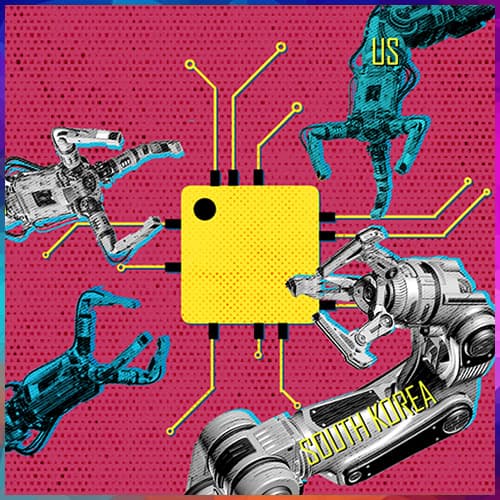
The global chip war is intensifying, expanding from a U.S.–China dispute over semiconductor exports into a broader contest involving AI computing, memory, manufacturing, lithography, supply chains and technological sovereignty.
Huawei is accelerating its challenge to Nvidia as demand for its AI computing products reportedly exceeds supply. The Chinese technology giant plans new Ascend 960-series processors for 2027, strengthening China’s efforts to create an alternative domestic AI-computing ecosystem.
Rather than competing solely on individual chip performance, Huawei is also targeting Nvidia at the system level, using large-scale clusters and high-speed interconnect technologies. This approach could help compensate for China's continuing constraints in access to the most advanced semiconductor manufacturing technologies.
Meanwhile, semiconductor controls remain a major issue between Washington and Beijing. U.S. policymakers face a difficult balance: restricting advanced processors can constrain Chinese access to leading technology, but tighter controls can also accelerate investment in domestic Chinese alternatives.
The conflict is spreading across the supply chain. High-bandwidth memory (HBM) is increasingly strategic as AI accelerators require enormous memory bandwidth, while advanced manufacturing equipment remains another critical bottleneck.
Lithography could prove decisive. China remains restricted from obtaining ASML’s most advanced EUV systems, increasing pressure on Chinese companies to develop domestic semiconductor equipment and alternative manufacturing technologies.
The chip war is therefore becoming an AI infrastructure war: Nvidia versus Huawei in compute, advanced foundries versus Chinese manufacturing, global memory leaders versus emerging domestic alternatives, and Western export controls versus Chinese self-reliance. The ultimate prize is no longer simply semiconductor leadership—it is control over the computing infrastructure powering the next generation of AI.