
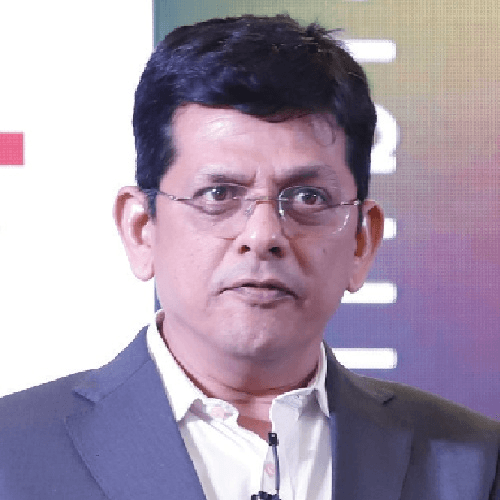
NITIN MEHTA
DIGITAL RISK LEADER, EY
Navigating the digital landscape requires foresight, resilience and a proactive approach to risk. Only then can we unlock the true potential of technology. I was reading a research report, and it said that 20% of data globally is generated in India, but only 3% of that data is hosted in India. So, India is the data source, but it is not the data infrastructure for the world. If you look at AI in India, the problem is, we are still adapters, we are not creators. If you look at industrial revolutions, right from steam engine through electricity, and then ERPs and the technology beyond, India is known to have jumped revolutions. We never went into mainframes, we directly jumped into mini computers and then into client server technology. But we always had time in all the previous industrial revolutions.
In the era of the Fourth Industrial Revolution and the rapid rise of AI, India no longer has the luxury of time to adapt at a gradual pace. Unlike previous technology shifts, the current AI-driven industrial revolution leaves little time for Indian organizations to adapt before the next disruption arrives. I won’t say that India is lagging behind the world, simply because we don't have our sovereign elements yet. We continue to depend on technology superpowers such as the United States, where access to some of the most advanced AI models—including those developed by companies such as Anthropic and others—is subject to restrictions, limiting their availability outside the country. So we have a dependency on them, but I believe it's not about where we are lagging behind, but it's about the potential and the opportunity that all of us together have. I think there is a phenomenal opportunity for the private sector to work with the government and have a strong public private collaboration to build on this.
All the current emerging trends that we hear today – semiconductor, AI, advanced analytics, data center & cloud infrastructure, cyber security, quantum computing. - all these elements are not really separate, isolated, segregated, different trends, but this is one full stack that forms a part of interdependent layers. This is how I look at it. If we start at the fundamental foundation of this four-layered structure, there is the compute. We all understand the government is pushing to promote and incentivize the semiconductor industry or the data centers, and unless we have that foundation, none of the other three layers will work. The second layer built is around cybersecurity, which serves as the foundation for protecting every other layer of the technology stack. The third layer focuses on intelligence, encompassing automation, advanced analytics, and AI-driven capabilities. The fourth and final layer is trust—the cornerstone that enables secure, reliable, and responsible digital transformation.