

The global smartphone market is heading toward a major structural shift as rising component costs threaten the affordable-device segment. Counterpoint Research forecasts that more than 230 million annual sub-$200 smartphone shipments could disappear between 2025 and 2030, representing an approximately 40% contraction.
Key Highlights
- 230M+ annual sub-$200 shipments could disappear.
- Affordable smartphones forecast to shrink ~40% by 2030.
- $200+ smartphone shipments could grow ~26%.
- Mid-range devices become the key competitive battleground.
- Premiumization, AI and 6G reshape future market value.
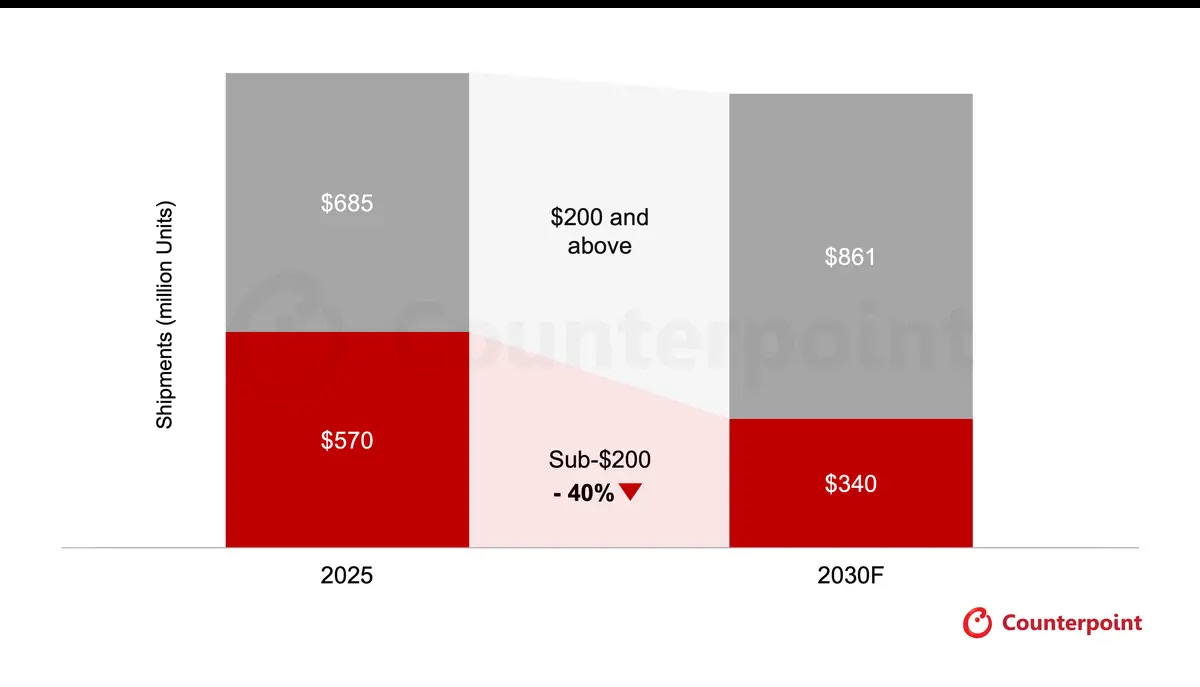
The decline comes even as total smartphone shipments recover to around 1.20 billion units by 2030, close to 2025 levels. Higher memory and chipset prices, rising minimum specifications and reduced OEM appetite for low-margin products are making entry-level smartphones increasingly difficult to sustain.
Not all displaced buyers will upgrade. While shipments priced above $200 are forecast to grow approximately 26%, some consumers may retain existing phones longer or turn to used and refurbished devices, particularly in price-sensitive markets.
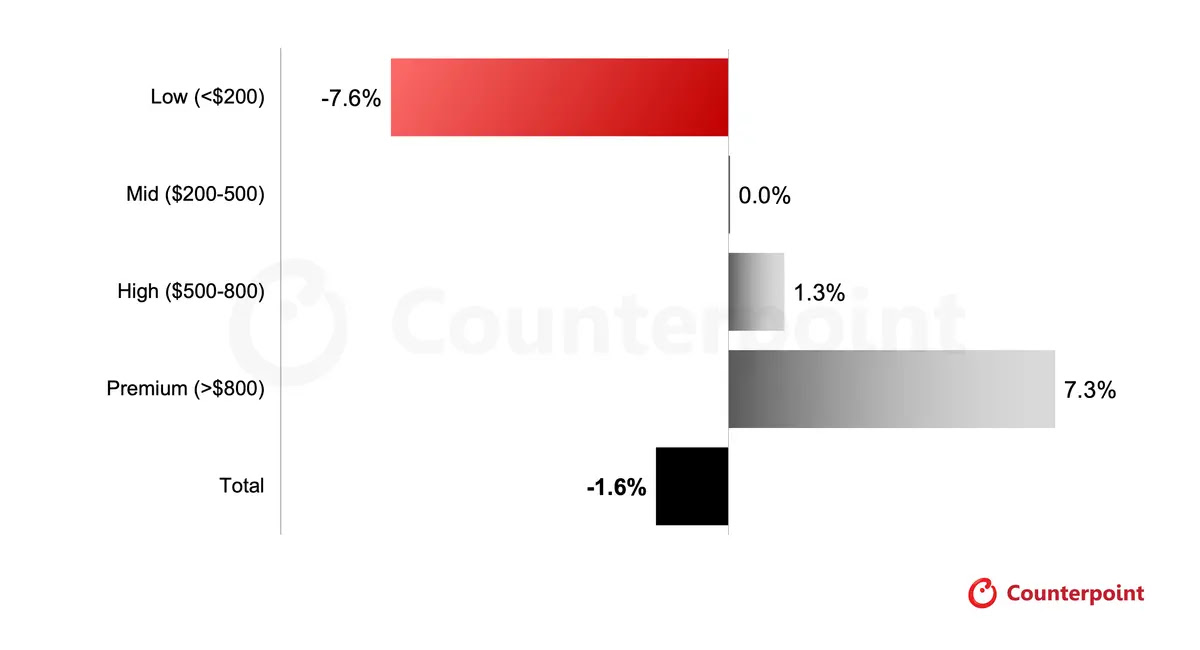
This creates a broader digital inclusion challenge. Affordable smartphones remain an important gateway to mobile internet services in lower-income economies. Reduced availability could slow first-time smartphone adoption and increase the importance of financing, trade-ins, subsidies and circular-device programmes.
Meanwhile, the mid-range will become the new competitive battleground. OEMs are expected to emphasize better memory, storage, 5G, cameras, battery life, software support and selected on-device AI capabilities.
Premium smartphones offer the strongest value opportunity, with shipments forecast to grow at approximately 7% CAGR. Apple should remain a major premium-value contributor, while Samsung, Huawei and other manufacturers pursue higher-value portfolios.
By 2030, therefore, the smartphone industry may recover in volume but look fundamentally different in value. AI, foldables, premiumization and eventually 6G will drive differentiation, while affordability becomes one of the industry's biggest strategic challenges.