
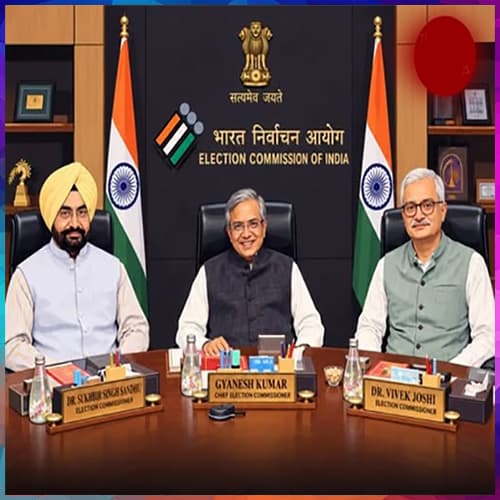
The Election Commission of India (ECI) is facing scrutiny after an Indian Express investigation reported that Election Commissioners Sukhbir Singh Sandhu and Vivek Joshi recorded objections at least 14 times over 10 months concerning electoral-roll administration and the Special Intensive Revision (SIR).
Key Highlights
1. 14 objections recorded over 10 months.
2. ECI says final decisions were unanimous.
3. Form 6 changes remain disputed.
4. Electoral database access raised concerns.
5. ECINet governance is under scrutiny.
6. Political parties offer sharply different interpretations.
7. Transparency and auditability are central to electoral trust.
The ECI acknowledges the notes but describes differing views as a normal part of institutional deliberation. It says decisions and electoral reforms over the past year, including SIR, ultimately resulted from unanimous decisions of the full Commission.
However, the report says several specific questions remain publicly unanswered, including who authorized changes to Form 6, who authorized certain West Bengal appeals, and why a proposed audit of ECINet did not proceed.
Technology governance has consequently emerged as a central issue. The ECI says its digital platforms operate under strict data-security protocols, while Sandhu's August note reportedly raised concerns that statutory officers lacked complete access to ERONet.
The Form 6 dispute is particularly significant. According to the investigation, Joshi argued that altering the form required amendments to electoral rules; Sandhu later characterized the implemented change as unauthorized and illegal.
The controversy has triggered political criticism, while the BJP has characterized internal dissent and subsequent consensus as evidence of democratic deliberation. These competing political interpretations should be distinguished from the documented internal notes themselves.
The larger issue is institutional trust. As elections become increasingly technology-driven, transparent authorization, clearly defined database access, audit trails and documented decision-making become critical to maintaining confidence in electoral administration.
Key Highlights
1. 14 objections recorded over 10 months.
2. ECI says final decisions were unanimous.
3. Form 6 changes remain disputed.
4. Electoral database access raised concerns.
5. ECINet governance is under scrutiny.
6. Political parties offer sharply different interpretations.
7. Transparency and auditability are central to electoral trust.