Platform introduces peer "vouching," company controls to remove false employment claims, and expanded identity partnerships, as AI-generated fake accounts make online impersonation increasingly common and harder to detect.
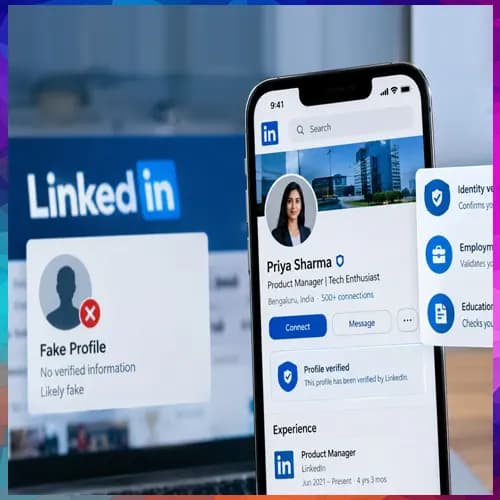
LinkedIn has introduced a new set of verification tools aimed at tackling rising instances of fake profiles and false employment claims on the platform, as artificial intelligence continues to make it easier to fabricate convincing online identities.
The company announced the changes this week, giving individual members new ways to confirm each other's professional history while granting businesses greater authority over who can publicly associate with their brand on the platform.
Peer vouching and company-level controls
A central addition allows members to vouch for colleagues or classmates they have worked or studied alongside, confirming that a shared professional experience genuinely took place. Unlike a skill endorsement, this feature does not comment on the quality of someone's work — it simply affirms a claimed association occurred.
To limit misuse, LinkedIn has attached several safeguards to the tool. Only members with already-verified profiles can vouch for others, and they must have maintained a connection with that person for at least a year. Vouching accounts are also required to have two-factor authentication enabled, reducing the risk of compromised accounts issuing false confirmations.
Separately, LinkedIn is expanding a feature previously tested among recruiters and executives that allows company page administrators to remove profiles falsely claiming employment at their organization. Admins can manually detach such profiles from appearing in the company's page or associated search results. LinkedIn is also piloting an option requiring members to verify employment — for instance, through a company email address — before their profile can link to a business page going forward.
Importantly, removal from a company page does not alter the member's own profile; individuals retain control over their personal LinkedIn presence. However, once removed, their profile will no longer display a clickable link to that company or show the role as verified. According to the company, this feature currently applies to full-time employees rather than contractors.
Expanding verification beyond LinkedIn
LinkedIn is also broadening partnerships that let members carry their verified identity to other platforms. Caller-ID service Truecaller and review platform PeerSpot are joining existing partners, meaning verified LinkedIn identities could soon appear in contexts such as caller information during phone calls.
Company executives framed the updates as part of a longer-term push around authenticity. LinkedIn said its verification systems have already confirmed the identities of 115 million individual members and over 700,000 companies to date. The company also noted that verified profiles see measurably higher engagement, reporting significantly more post views and impressions compared to unverified accounts.
The rollout comes amid broader concern across the internet about AI-enabled impersonation, with LinkedIn positioning credibility and verified professional identity as increasingly valuable amid the growing ease of fabricating online personas.